
|
For two more days we travelled, much against our wishes, eastward, living on wild carrots dug by the Indians from the prairie sod, on balls of down - ducklings - just out of the shell, driven by waders in the sloughs ashore and killed with sticks, and on the little flour we had managed to bring with us. We urged our Indians to free us so that we might find our way back to the camp of the troops. They refused. Should Big Bear's men discover and kill us they would be held responsible, they argued, and they were unwilling to accompany us. On Sunday, May 31st, the Rev. Mr. Quinney held service. Camp was not moved that day, and we were overjoyed when at a council later, our guards, with no very good grace, consented to let us go. The next morning early we were on our way westward. A long hard tramp lay ahead of us; we had but one flour bannock for a dozen mouths, yet we stepped out feeling equal to any test of endurance, for at last we were free - going to meet "our own people" after this sickening two months of privation, of unrelieved menace, of soul-racking suspense. We must have made nearly forty miles. Late afternoon found us almost under the shadow of Frenchman's Butte. We had crossed the streams waist deep in frigid water, but chilled and jaded though we were, Quinney, Dufresne and I left the women with the others in a bluff beside the Little Red Deer and toiled on. Before leaving I changed the ragged trousers I wore for a better pair secured somehow in the camp. It was in the pocket of these discarded trousers, hanging on a tree, that I left the big brass key of the store at Frog Lake which I turned in the lock after the massacre began. One day I hoped I might return to that wild and lonely spot and endeavour to find it, but I never did. It was all that remained of the Hudson's Bay Company's business at Frog Lake. Shortly after leaving the bluff the long clear whistle of a steamboat fell on our startled ears. It came from the Saskatchewan, three or four miles distant. We could not see the boat, but the familiar, homely sound was for us the most entrancing music, spurring us on, for it meant that help, that friends, that relief from a strain that had become almost unendurable, was almost within hail. 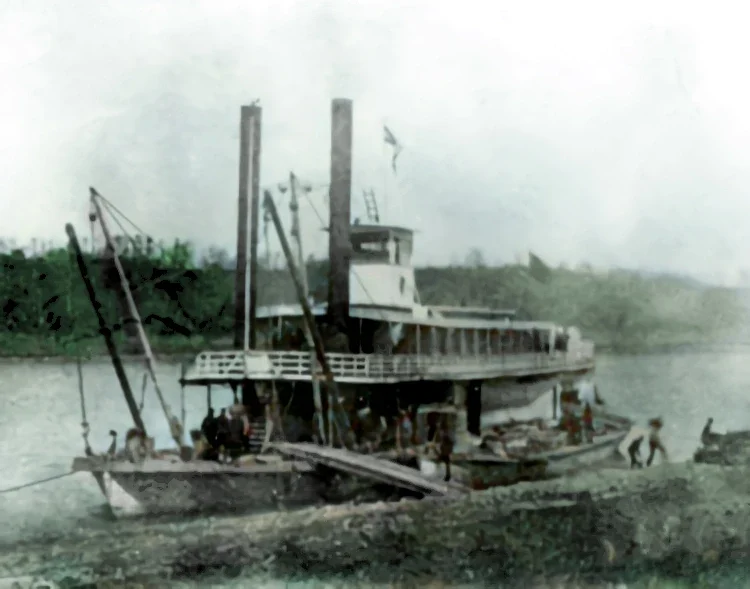
Nightfall was coming on rapidly and we were anxious to reach the summit of the Butte before dark, for we hoped from this commanding point to sight the camp of the troops. Aching from head to blistered feet, we dragged ourselves up the wooded slope and, well-nigh exhausted, at length reached the top. The sun had set but light enough remained to show us something of the surrounding country. We crept guardedly out on the bald round summit, for Indian scouts, if there were any about - and it will be evident we knew nothing with certainty as to the location of either troops or Indians - could see us even more readily from the bottom than could we them from the top. Under cover of the scrub, - I slipped over to the side whence, six days before, we had decamped on the morning we heard of the troops' arrival at Fort Pitt. There stood the Thirst Dance Lodge. It looked brown and deserted, for the sun had scorched its green roofing of leaves. Suddenly I made out two mounted men swiftly circling the lodge. I beckoned to Dufresne. He joined me. I pointed to the riders and the half-breed started. "Indians!" I whispered. "No Redcoats. See their clothes Dufresne stared. "Sure!" he returned. 'Big Bear's men, I guess. Indians sure." We crept back and told Quinney. All day we had tried to induce him not to expose himself needlessly against the possibility of Indian prowlers in our vicinity, but without success. Now he lost his head completely. "They're white troops, not Indians!" he cried. "We are saved!" He was deaf to Dufresne and me. He pulled a white handkerchief from his pocket, rushed out on the bare summit and waved it, shouting like a madman. Another rider tore along the bushes at the foot of the slope. I pointed him out to Dufresne. "Yes," he muttered. "And see the squad drawn up in the shadow of the bluff yonder! Just the size - Big Bear's warriors!" I looked at Quinney - and I would be ashamed to say with what bitterness just then. To think that after all we had come through, with safety almost within our grasp, fate, hex tool this madman and his blundering perversity, should step between us and the goal! We were trapped. We were under no illusion. We had been told, often enough and bluntly enough, the penalty that would follow any attempt at escape. And we were in no doubt, Dufresne, the half-breed, and I, as to the identity of the men even then, probably, crawling towards us up the slope to shoot us down. Dufresne only was armed. He walked to the centre of the open space and stood with his gun in his hands, waiting. "Well, you can die only once," he said grimly. I went toward him, but he asked me to keep away, and I did. He had Cree blood in his veins. We should surely be killed, but if not too close to a white man he might be spared. Quinney continued to shout. Presently an answer came - an Indian yell! I saw his face pale, but he shouted again, desperately, even louder than before. Was he actually mad? A pause followed. It was now too dark to see the group at the foot of the Butte. A voice came at length through the gloom. "Who are you?" Plain Anglo-Saxon! Quinney fairly danced. Dufresne and I listened, silent, bewildered. Could they actually be white men and not Indians? The missionary shouted again. "I'm Mr. Quinney, and here's Mr. Cameron!" Again the voice: "Well, if you're white men, come down!" So Quinney was right, after all - Dufresne and I wrong. We cheered, cheered wildly then - yelled like maniacs. The others answered. But it might easily have been the other way about; the judgment of the native and myself should have been at least as good as that of the missionary, and I still maintain that caution, not blind guessing, was what the situation demanded. I passed the reverend gentleman, but he was close behind. I made fast time. Nearing the foot of the Butte, he gasped: "Let me go in ahead, will you?" The one momentous fact to me just then was that we were safe, and whether I went in first or last was a matter of slight importance. I humoured my clerical companion's vanity by falling back and allowing him to get into the spotlight. We walked into a detail of scouts under Major Dale, General Strange's brigade officer, on their way from the camp of the Alberta Field Force to the landing of the steamboat we had heard earlier in the day. General Middleton was aboard, coming from Battleford with more troops to reinforce General Strange. Our reception was overwhelming. I met old acquaintances and mounted policemen. The major detailed two men to accompany us to camp, now located in the Little Red Deer Valley, a mile north of the battlefield. The scouts dismounted and made us ride, walking beside the horses. The sentries safely passed, and at eleven o'clock we were ushered into the presence of General Strange. 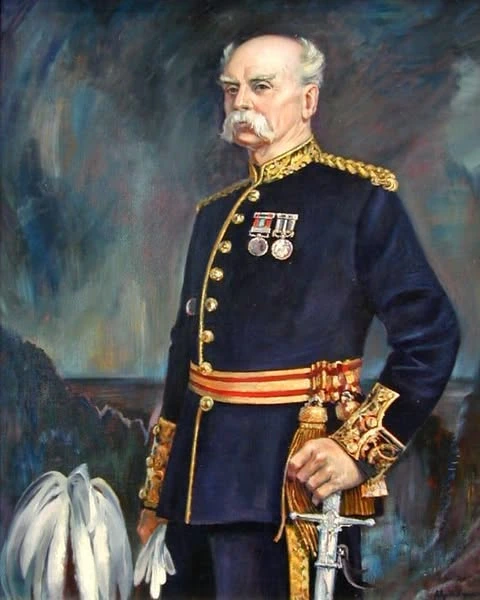
"Gunner Jingo" was stretched comfortably under the blankets in his tent, but he sat up and shook our hands warmly while he expressed his gratification. He had marched five hundred miles to liberate us and he looked his satisfaction at the accomplishment of his purpose. General Strange was a typical British officer of the old school, a fellow campaigner of Lord Roberts when both were subalterns in India. Tall, lank, rugged, brave, outspoken and generous, he was the idol of his command. His striking figure made him a conspicuous target at Frenchman's Butte. To others fell the rewards and honours of the campaign, but the West knew what was due to General Strange for his prompt action in organizing his column and for his splendid march from Calgary to Fort Pitt with the Alberta Field Force. Not always in actual warfare are the greatest victories gained, and his activity had a moral effect that possibly prevented all the Indians and half-breeds in the North-West from being drawn into the rising. The general ordered his cook to get us up the best the camp afforded - some meal, that! I was shaking from chill and excitement and just before we began supper, an officer of the North West Mounted Police came into the tent and stretching himself on the ground opposite me held out a tin cup. "Drink it," he said. "You'll feel better." I took the big cup. It was full of rum. "Good Lord!" I exclaimed, do you want to lay me out?" The officer smiled. 'It's all right. It won't affect you. You're too worked up." I drank the rum - all of it. Supper finished. I went with him to his tent, which I was invited to make my headquarters. Two reverend gentlemen were also his guests on the expedition, Canon George McKay and the Rev. Wm. P. McKenzie, both of Macleod, Alberta. I think the only thing about me affected by the rum was my tongue. I talked incessantly until three in the morning - lay and talked and shook. It was like the ague, that shaking, and I could not shake it off at once. Remember, I had not seen a new face or heard a friendly voice that dared to say what it felt like saying or heard a scrap of news from the outside world - my world - for two long wretched months. I do not wonder I shook. Before daylight next morning a detail had brought in Mrs. Quinney, Halpin and the remainder of our party. I do not know exactly how we felt just then. There are moments in most men's lives that, on their looking back, seem delirious with supreme joy or supreme horror. The latter I experienced at Frog Lake on the morning of April 2nd, 1885; the first at Frenchman's Butte on the night of June 1st in the same year. |
Questions - Comments?


Links to all jkcc.com Webpages:
| Ausland Lake |
Northern Saskatchewan
| Deep River Fur Farm |
| Deep River Trapping Page |
| Deep River Fishing Page |
| My Norwegian Roots |
| Aasland Farm, Norway |
| My Norwegian Family |
| Early Mink of People Canada |
E. Rendle Bowness
| The Manager's Tale |
Hugh McKay Ross
| Sakitawak Bi-Centennial |
200 Year History.
| Lost Land of the Caribou |
Ed Theriau
| A History of Buffalo Narrows |
| Hugh (Lefty) McLeod |
Bush Pilot
| George Greening |
Bush Pilot
| Timber Trails |
A History of Big River
| Joe Anstett, Trapper |
| Bill Windrum, Bush Pilot |
| Face the North Wind |
By Art Karas
| North to Cree Lake |
By Art Karas
| Look at the Past |
A History Dore Lake
| George Abbott |
A Family History
| These Are The Prairies |
| William A. A. Jay, Trapper |
| John Hedlund, Trapper |
| Deep River Photo Gallery |
| Cyril Mahoney, Trapper |
| Saskatchewan |
A Pictorial History
| Who's Who in furs |
1952 to 1956
| A Century in the Making |
A Big River History
| Wings Beyond Road's End |
| The Northern Trapper, 1923 |
| My Various Links Page |
| Ron Clancy, Author |
| Roman Catholic Church |
A History from 1849
| Frontier Characters - Ron Clancy |
| Northern Trader - Ron Clancy |
| Various Deep River Videos |
| How the Indians Used the Birch |
| The Great Fur Land |
| The Death of Albert Johnson |
| A Mink and Fish Story |
Buffalo Narrows
| Gold and Other Stories |
Berry Richards
| Saskatchewan James Carnegie |
| Ausland Lake |
Northern Saskatchewan
| Deep River Fur Farm |
| Deep River Trapping Page |
| Deep River Fishing Page |
| My Norwegian Roots |
| Aasland Farm, Norway |
| My Norwegian Family |
| Early Mink of People Canada |
E. Rendle Bowness
| The Manager's Tale |
Hugh McKay Ross
| Sakitawak Bi-Centennial |
200 Year History.
| Lost Land of the Caribou |
Ed Theriau
| A History of Buffalo Narrows |
| Hugh (Lefty) McLeod |
Bush Pilot
| George Greening |
Bush Pilot
| Timber Trails |
A History of Big River
| Joe Anstett, Trapper |
| Bill Windrum, Bush Pilot |
| Face the North Wind |
By Art Karas
| North to Cree Lake |
By Art Karas
| Look at the Past |
A History Dore Lake
| George Abbott |
A Family History
| These Are The Prairies |
| William A. A. Jay, Trapper |
| John Hedlund, Trapper |
| Deep River Photo Gallery |
| Cyril Mahoney, Trapper |
| Saskatchewan |
A Pictorial History
| Who's Who in furs |
1952 to 1956
| A Century in the Making |
A Big River History
| Wings Beyond Road's End |
| The Northern Trapper, 1923 |
| My Various Links Page |
| Ron Clancy, Author |
| Roman Catholic Church |
A History from 1849
| Frontier Characters - Ron Clancy |
| Northern Trader - Ron Clancy |
| Various Deep River Videos |
| How the Indians Used the Birch |
| The Great Fur Land |
| The Death of Albert Johnson |
| A Mink and Fish Story |
Buffalo Narrows
| Gold and Other Stories |
Berry Richards
| Saskatchewan James Carnegie |