
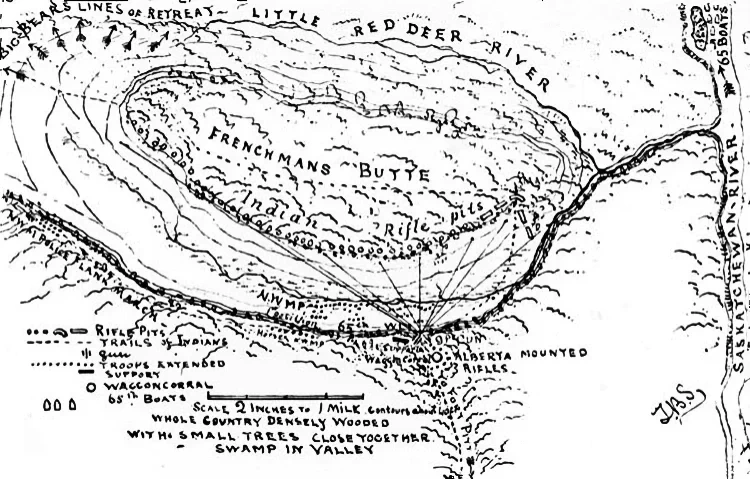
I was awakened early by the voice of an Indian. He rode up and down through the camp in the half-light before dawn. "Waniskal" he cried. "Twenty went to the fort last night. Two have not come back!" One of course was Meeminook. The other turned up later afoot. Steele's men had captured his horse. It was a dismal note in the ears of the Indians. The day of accounting had arrived. Despite my lacerated lip, I ate breakfast in a state bordering on intoxication - an intoxication of cheerfulness. The frightful monotony of our lives for two months - even danger becomes monotonous if you are exposed to it for long enough - was to be smashed; at least there would be fighting and in the end, some of us, at all events, would probably be living and safe and imbecilely happy in consequence. The date was May 27th. The sun rose over the wooded slope behind us strong and clear, flooding the valley with its genial radiance. Little Poplar, reminding me of Yankee Doodle in his tightly buttoned waistcoat, breechclout, moccasins, and stiff felt hat with a feather stuck in the side, came through the camp, his brown muscular legs and arms bare, his face gaudy with red and yellow paint. His rifle rested carelessly across his horse's withers. Always the dandy of the camp, he looked no less the dandy in warrior undress. Walking his horse up and down, nonchalantly quavering a Crow war song. He laughed, too, now and then somewhat contemptuously, and presently he ceased singing and called so that the whole camp might hear: "Ai-waik-ekin! I'm astonished! Here are the white soldiers! I thought the Wood Crees were brave, but they do nothing to prepare to fight, sitting in the lodges with the women. Will they be knocked on the head like rabbits? Does the sight of a few redcoats make them sick?" The Plains Crees were already stripping for battle, painting their bodies, and after Little Poplar's taunt, the Wood Indians were not slow in following their example. Some of the half-breeds, too, appeared painted, with guns in their hands and handkerchiefs tied around their heads to increase their resemblance to the Indians. Carts were abandoned. Loading their effects on the ponies and dogs, the Indians moved up a wooded ravine running at right angles into the valley behind the camp. The upland was thickly forested almost to the brink of the valley on the east, and along the summit and in the ravine the Indians began hastily to dig rifle pits, a work in which some of the prisoners were compelled to assist. I packed Patenaude's horses, including the devastating Pinto, but I was not called on to build pits. We moved on up the slope, perhaps two hundred yards back from the valley. Before quitting the old camp Mr. McLean wrote on the fly-leaf of a book he had picked up somewhere and left in one of the tents the following note: "Look for us north-east from here. We are all well. May God protect us." Scouts reported the troops advancing toward Frenchman's Butte. Patenaude and a few of his Wood Cree friends, having with them the Rev. Charles Quinney, his wife, Henry Quinn and myself, had drawn a little apart from the main camp, from which we were hidden by intervening woods. Big Bear's men frequently came round to see that we were still there and advised us to move nearer them. About four o'clock our Indians told us they had decided if possible to withdraw finally from the hostiles. We packed again and moved off. The country was covered with small timber, broken here and there by narrow, open glades. We were instructed to travel "nance" - abreast and some way apart; thus no clearly marked trail would be left and Big Bear's men, should we be missed and pursued, would have difficulty in following us. We had gone only a few hundred yards when we heard General Strange in tones of thunder demanding our release. And what music in the ears of us captives was the earth-rocking roar of that nine-pounder field gun! We could have cheered and cheered again, but the cheering had to be deferred: we walked on silently with prudence dominating our exultation. 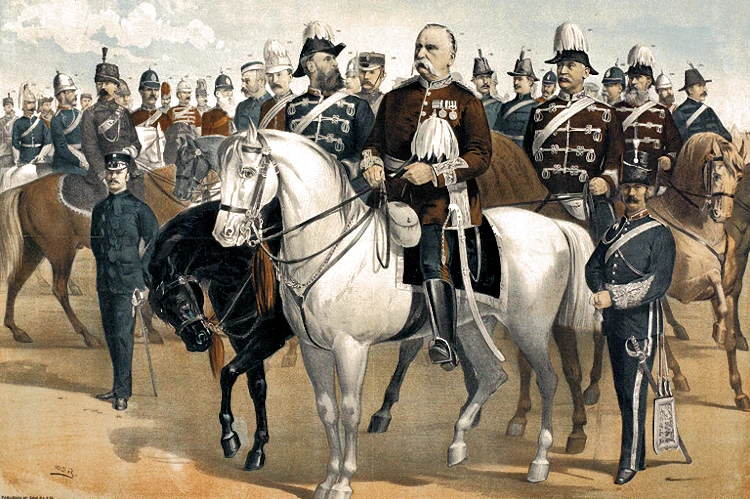
An old woman began to lament, asking what the poor Indians had done that the white soldiers should come to kill them all with their big guns. Blood will tell. She was mother to one of our friendly Indians, but did not like to see any of her nation hurt. She concluded with an invocation: "Oh, Sun, if you are kind to our children today I will show you a looking-glass!" What Sun wanted with a looking-glass was too many for me then and is yet, unless the wrinkled dame believed that, like a woman, he would do anything for a glance at his own face. If this doesn't explain it, her invocation remains for me an unsolvable riddle. A few shots were fired. We hurried on for a mile; then coming together, after another five miles we camped some two miles from the main band. We had travelled in a circle to further cover our retreat. Our Indians still feared pursuit and our evening campfire was a tiny one. Longfellow, guardian of the missionary and his wife, went back at dusk to lie on our trail and throw Big Bear's men off the scent if they came after us. Patenaude had gone to Big Bear's camp, if possible to get James K. Simpson, his stepfather, away. Longfellow returned at ten o'clock. Imasees, in an extremely dangerous mood, heading a small trailing party, had been intercepted by him and misdirected as to the location of our camp. After a futile attempt to follow our tracks with the aid of matches, they abandoned the search, Longfellow protesting that we were not trying to escape and would rejoin the main party in the morning. It was fortunate for us that Longfellow met the search party. The longest part of Longfellow, I have since often thought, was his head. Quinn, as already related, had made one attempt to escape and Longfellow mistrusted him. If in a second attempt, he should succeed and Big Bear's men afterward find us, we would surely suffer. Longfellow, therefore, before leaving camp that evening delegated to me in confidence the job of keeping Quinn under surveillance. Never did I allow him out of my sight, and when it came time to turn in I suggested that as we had but one blanket each, for the sake of comfort, we should sleep together. Quinn was in exceedingly bad humour. Evidently, he sensed that he was under suspicion and resented it. He preferred to sleep alone, he said, intimating further that he was quite able to take care of himself. I lost patience. "We're going to sleep together, Quinn, and that's all there is to it," I told him bluntly. "You'd slip away and leave us if we'd let you, but you're not going to get the Chance. You made one attempt and just missed losing your scalp. Incidentally, you put us all in danger. You're not going to do it again. How do you know the Indians aren't between us and the troops, guarding the east bank of the coulee from above here right down to the Saskatchewan? You think I'm watching you and you don't like it. Well, I am, and I mean to make a job of it. Now, let's turn in." He protested that he had no intention of again trying to escape, but I would not trust him and sleep together we did. Or we lay down together - Quinn did the sleeping. We breakfasted at daybreak. Soon afterward Louis Patenaude appeared with Halpin, Francois Dufresne and a few more Indians and half-breeds. He had been unable to smuggle Mr. Simpson away from Big Bear. At half-past six we again heard the boom of the big gun, much closer than on the previous evening, and so the more welcome in our ears. It ushered in the battle of Frenchman's Butte, and for three hours the solemn majesty of that verdant wilderness echoed and rocked to the belch of cannon, the bursting of shells and the spiteful crash of musketry. Our party moved off but with no thought of rejoining the main camp to the north. We travelled north-east, until crossing a little prairie perhaps a mile from the battleground and directly in the line of big-gun fire, a shell hurtled past on the left. To me its whistle was music, but it threw the Indians into panic and they quickened their pace to reach the woods ahead. The actual battle was hidden from us by the intervening scrub. At the timber on the far side of the prairie, we halted for a moment to adjust our loads. We looked each instant to see the scarlet tunics flash into sight on the plain behind us, but the minutes passed and we looked in vain. We urged the Indians to wait; they were deaf to our entreaties. Louis and Sitting Horse had gone back to the coulee to watch the fight; they refused to let me accompany them as I begged to be allowed to do. We went on slowly toward the east, cutting our way with axes through the thick poplars, and our hopes sank as the firing grew fainter, slackened and at length died altogether. About noon Louis and Sitting Horse overtook us. The troops had retreated, they said, a number having been killed. Five of the Indians were wounded, one seriously. This was certainly disheartening. Was it possible the troops had been defeated - that we were not to be released after all? Later we learned that General Strange's casualties consisted of three men wounded. We camped for the night about eight miles from the battleground. I returned with Louis and another Indian on horseback to the little prairie for provisions left in a cart we had been compelled to abandon when we entered the thick bush. The peace of the wilderness brooded once more over the land, but from the north the faint mutter of gunfire reached us. This, we surmised rightly, must be Big Bear's men, retreating on a line paralleling our own and shooting rabbits for food along the way. What had actually happened was this: General Strange had retired toward Fort Pitt and the Indians had immediately struck camp and taken the opposite direction. They would have stayed to fight again but had no ammunition to waste. Furthermore, they objected to "the gun that shot twice." It was unfair they thought of the soldiers firing great bullets that themselves burst when they struck their rifle pits. Kahweechetwaymot, a double murderer, had had the flesh stripped from his thigh by a piece of shell. He died before another sun rose upon his bed of torture. Wandering Spirit was active throughout the fight. He moved up and down among the rifle pits, haranguing his warriors, buoying up their courage. Oskatask, who has more than once stalked across these pages, was also conspicuous in the engagement. Each time a shell dropped and burst he sprang to his feet in his rifle pit and shouted derisively "Tan at eel" He had been about the forts both on the Canadian and American frontiers, had watched the troops at drill and out of the maze of orders which were simply sounds to him, had pounced upon and grappled to himself the magic words: "Stand at ease!" He found much exuberant joy in launching at the troops, who were anything but at ease in the plunging fire from the pits above them, his mock command. Later a rifle ball through the wrist took the edge off Oskatask's enjoyment. From General Strange's book, Gunner Jingo's Jubilee, I take the following extracts descriptive of the Battle of Frenchman's Butte: "On the morning of May 28th the Force was roused without sound of bugle and after a scanty breakfast, at daybreak moved forward toward Frenchman's Butte. The advance was led by Major Steele's scouts, who dismounted, extended and flanked each side of the trail. Next came the main body, consisting of some three hundred men of the Winnipeg Light Infantry and Quebec Voltigeurs, while the nine-pounder field gun under Lieut. Strange brought up the rear. "Suddenly we came to a comparatively open space, to which trails converged from every direction. It was the encampment where the Braves had held their last Sun Dance. The poles of the great sacred lodge still stood with the leafy garlands hanging from the centre one, showing how lately a number of young warriors had been made under the established custom of self-torture, to prove manly endurance, while the old warriors had recounted their prowess, mainly in horse-stealing and murder. "I was riding with the advanced scouts, when we came upon a campfire still alight, with an abandoned dough cake in the ashes. It was at the edge of an abrupt descent, down the wooded slope of which ran the trail, leading to what appeared to be the left of their position. Streamers of red and white calico, the spoils of Fort Pitt, hung from the branches of a tree on the opposite crest of a bare glacis-slope. The valley, about five hundred yards wide, intersected by a sluggish creek, widening into a swamp, and fringed here and there with willows. The hill salient, and the swampy stream followed the outline of the foot of the slope, eventually joining the Saskatchewan, which I knew to be about five miles to the south. "The crest of the hill was thickly wooded, and the field-glasses disclosed what seemed to be long lines of rifle-pits along its edge. They were skilfully concealed, however; even the loose red earth dug out in their construction had been hidden by broken branches of trees stuck in to represent a living growth. There was not a sign or sound of movement; the very streamers drooped in the still morning air. "Steele and his men were close behind, but withdrawn from the brow to escape observation. The ground on our side of the valley was hemmed in with thick bush, which left little room for formation, except a small space to the right rear, where the wagons were subsequently corralled. "Nothing more was to be learned from this side, so I descended with Scout Patton to reconnoitre. We reached the bottom of the valley and were close to the little stream when his horse suddenly sank to the girths. I reined back and he scrambled with difficulty to solid ground. It was useless to proceed further, as it was evident our horses could not cross there. We returned to the crest of the hill without being fired upon. The enemy evidently wished to draw us into an ambuscade and calculated that I would go blundering on with my force. I subsequently found that the attractive streamers, which I had distrusted as being at variance with the usages of Indian warfare, would have enticed us into the re-entering angle made by their main line of rifle pits. A long and deep shelter trench, admirably constructed and concealed, gave a flanking fire on the left face of their position, into which the trail led. "The field gun was ordered up to open fire from the edge of the descent, which quickly drew a heavy response. I deployed the small force at my disposal and ordered Major Steele's mounted police and scouts to extend to the left, dismount and descend the hill to a fringe of willow bush along the edge of the creek. "The Voltigeurs, under Colonel Hughes and Major Prevost, went down the hill at the double and extended along the creek on the right of the dismounted cavalry, and the Winnipeg Light Infantry, under Major Thibadeau, took what cover they could get, on the right again, in the willow bushes on the edge of the swamp. Two companies of the Winnipeg battalion, under Colonel Osborne Smith, were held in support on the hill, while Major Hatton's Alberta Mounted Rifles were dismounted and ordered to cover the right flank, where the wood was thickest. "As I rode along the ridge, an admirable view of the entire position was gained. No sooner had my men extended than the whole line of rifle-pits opened fire from the opposite summit for about a mile. But the fire was without much effect, for the range was four hundred yards, my men had taken advantage of all possible cover in the willows, and steadily returned it. Lieut. Strange had got the exact range - 600 yards - of the pits, with a few common shells. He then tried shrapnel, evidently without much effect, as the fire from the pits did not slacken. Their occupants had also got the range of the field gun with long-range Sharp rifles and the wicked ping of the bullets made it desirable to order the gun detachment to lie down, Number Two sponging and ramming home while kneeling. "The officer alone stood to watch the effect of his fire. There was no cover for the gun, and it could not be withdrawn without losing its coign of vantage, though its position was changed once to enfilade in succession both faces of the salient line of rifle pits. On the failure of shrapnel, a few rounds of the special case with leaden balls were tried, with no better result, and Lieut. Strange again had recourse to the common shell with percussion fuses. These, bursting in the loose earth thrown up before the pits, exploded in them, killing, as we afterwards learned, one Indian and wounding three others, in one of the large shelter trenches. The enemy bolted from some of the pits thus enfiladed into the woods from which they kept up a desultory fire. 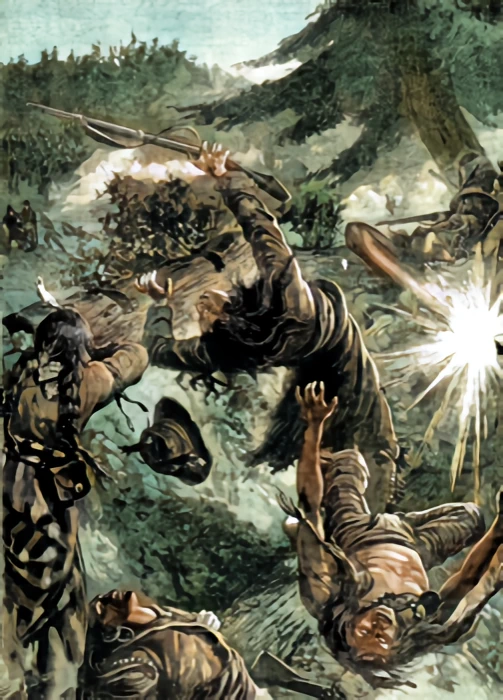
"Meanwhile, I saw some of the infantry endeavouring to cross the swamp. They sank waist-high in black mud, and even had they succeeded in crossing there was before them only the open slope of gradual glacis, swept by the fire from the pits. I descended to the position occupied by the Voltigeurs and. Steele's Scouts. Being the only mounted man in the valley, the enemy honoured me with a special salute and I dismounted, not wishing to draw fire and desiring also to test the position, which could be done only on foot. Constable McRae, of the North-West Mounted Police, was here wounded, receiving a bullet in the left leg. He objected with emphasis to being removed until he had used up his cartridges on the hostiles. "I saw that my men were at a great disadvantage, being overlooked by the enemy, who could see almost every man as he lay, while my force could judge of the whereabouts of the Indians only by the smoke of their rifles and so could effect little damage by their upward rifle fire on men in pits who were careful not to expose themselves. Direct advance, even if practicable, would I was sure entail very severe loss while crossing the swamp and open places, and I determined to try a turning movement round the enemy's right. I ordered Major Steele to retire his men, mount, and make a detour under cover of the bush to our left, to see if he could find a crossing and turn the enemy's position while their attention was occupied in front. To this end, the infantry and the field gun kept up a slow but steady fire. "Steele reported that the enemy's position extended a mile and a half and that he could find no way of turning it with his few men. I therefore sent an order for him to return. By this time Major Hatton reported the enemy on our right circling our rear and firing into the corral. The thick bush formed an impenetrable screen for their movements, and I ordered the corral to be retired out of the fire. Colonel Smith came to me and expressed his opinion as to the hopelessness of farther advance with the handful of men at our disposal. We could neither abandon our wagons nor cross them to the other side, the force had eaten nothing since 3:30 a.m., and the horses had not been unharnessed for eight hours. Moreover, we had only one day's rations then on hand, and the affairs at Duck Lake, Fish Creek and Cut Knife made me cautious; I did not think it advisable to sacrifice men for more than doubtful results when I was hourly expecting reinforcements from Battleford and a complete capture might be effected. Our half-breed guides were confident that the Indians would await a second attack, which might be delivered under more favourable conditions; and it was decided to retire. "Beside Constable McRae, Privates Lemai and Marcotte, of the 65th Voltigeurs, were reported seriously wounded. I applied to an officer of the Voltigeurs, who informed me that all the wounded had been brought up except Lemai, who would die anyway, and that the stretcher party refused to go to the advanced position where he had fallen. I pointed out that he was responsible for his men, as I was responsible for him, and asked him if he expected me to go on the quest myself. The naivete of that officer's reply as he turned on his heel was too funny; I simply laughed. It was: "General, I've been shot at quite enough today, and I'm damned if I go down there again!" "Under the circumstances, there was nothing for it but to accept the role so impolitely left me. Ordering my son to open a sharp fire of case shot to cover the advance of my stretcher party, I went to Dr. Pare, of the 65th, who came with alacrity, as did also Father Prevost, chaplain of the battalion, with crucifix in hand to administer the last rites of the church. We found the man well to the front, in an exposed position; and I must admit some impatience, which the good priest did not seem to share, during the confession of sin. I suggested to the brave padre the desirability of lumping the details, which he did and placing the wounded man, under Dr. Pare's directions, in the stretcher, the party moved up the hill, and I brought up the rear with the man's rifle. The fire grew hotter as we ascended; the rear man dropped his end of the stretcher, and I took his place. Thus General Jingo, who finished his first fight by kicking his general, met a just retribution in having to carry his wounded off his last field. "The Force returned to Fort Pitt, to remain for some days awaiting the arrival of provisions; and thus ended the Battle of Frenchman's Butte." |
Questions - Comments?


Links to all jkcc.com Webpages:
| Ausland Lake |
Northern Saskatchewan
| Deep River Fur Farm |
| Deep River Trapping Page |
| Deep River Fishing Page |
| My Norwegian Roots |
| Aasland Farm, Norway |
| My Norwegian Family |
| Early Mink of People Canada |
E. Rendle Bowness
| The Manager's Tale |
Hugh McKay Ross
| Sakitawak Bi-Centennial |
200 Year History.
| Lost Land of the Caribou |
Ed Theriau
| A History of Buffalo Narrows |
| Hugh (Lefty) McLeod |
Bush Pilot
| George Greening |
Bush Pilot
| Timber Trails |
A History of Big River
| Joe Anstett, Trapper |
| Bill Windrum, Bush Pilot |
| Face the North Wind |
By Art Karas
| North to Cree Lake |
By Art Karas
| Look at the Past |
A History Dore Lake
| George Abbott |
A Family History
| These Are The Prairies |
| William A. A. Jay, Trapper |
| John Hedlund, Trapper |
| Deep River Photo Gallery |
| Cyril Mahoney, Trapper |
| Saskatchewan |
A Pictorial History
| Who's Who in furs |
1952 to 1956
| A Century in the Making |
A Big River History
| Wings Beyond Road's End |
| The Northern Trapper, 1923 |
| My Various Links Page |
| Ron Clancy, Author |
| Roman Catholic Church |
A History from 1849
| Frontier Characters - Ron Clancy |
| Northern Trader - Ron Clancy |
| Various Deep River Videos |
| How the Indians Used the Birch |
| The Great Fur Land |
| The Death of Albert Johnson |
| A Mink and Fish Story |
Buffalo Narrows
| Gold and Other Stories |
Berry Richards
| Saskatchewan James Carnegie |
| Ausland Lake |
Northern Saskatchewan
| Deep River Fur Farm |
| Deep River Trapping Page |
| Deep River Fishing Page |
| My Norwegian Roots |
| Aasland Farm, Norway |
| My Norwegian Family |
| Early Mink of People Canada |
E. Rendle Bowness
| The Manager's Tale |
Hugh McKay Ross
| Sakitawak Bi-Centennial |
200 Year History.
| Lost Land of the Caribou |
Ed Theriau
| A History of Buffalo Narrows |
| Hugh (Lefty) McLeod |
Bush Pilot
| George Greening |
Bush Pilot
| Timber Trails |
A History of Big River
| Joe Anstett, Trapper |
| Bill Windrum, Bush Pilot |
| Face the North Wind |
By Art Karas
| North to Cree Lake |
By Art Karas
| Look at the Past |
A History Dore Lake
| George Abbott |
A Family History
| These Are The Prairies |
| William A. A. Jay, Trapper |
| John Hedlund, Trapper |
| Deep River Photo Gallery |
| Cyril Mahoney, Trapper |
| Saskatchewan |
A Pictorial History
| Who's Who in furs |
1952 to 1956
| A Century in the Making |
A Big River History
| Wings Beyond Road's End |
| The Northern Trapper, 1923 |
| My Various Links Page |
| Ron Clancy, Author |
| Roman Catholic Church |
A History from 1849
| Frontier Characters - Ron Clancy |
| Northern Trader - Ron Clancy |
| Various Deep River Videos |
| How the Indians Used the Birch |
| The Great Fur Land |
| The Death of Albert Johnson |
| A Mink and Fish Story |
Buffalo Narrows
| Gold and Other Stories |
Berry Richards
| Saskatchewan James Carnegie |