
|
Let me go back a bit, to the reservation, on the Battle River south-east of Fort Pitt, of Chief Poundmaker, where Big Bear was then in camp, and relate a happening there three months earlier that throws a yet more significant light on the attitude of these Indians than the events just recorded. I did not witness this, being a few miles away, and I am indebted to Major Fred A. Bagley, a veteran of the N.W.M.P., and to Mr. William McKay, of the Hudson's Bay Company, both of whom were active participants on the ground, for the details of what at more than one critical juncture threatened to end in a bloody debacle. 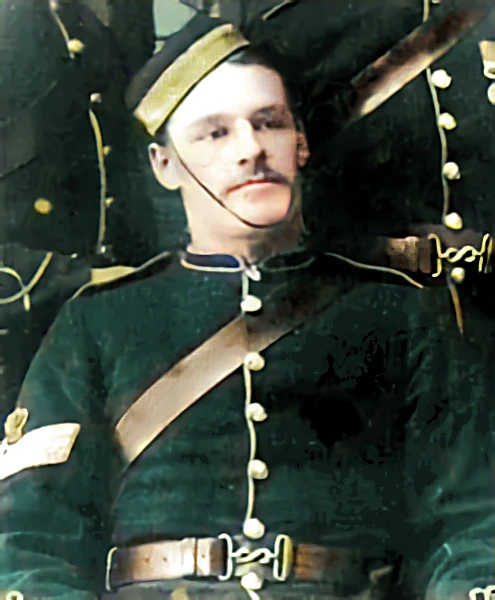
Kahweechetwaymot, a member of Big Bear's band, went to John Craig, farm instructor on the reserves of Chiefs Poundmaker and Little Pine, and asked for provisions for a sick child. The government furnished supplies to be issued when the need was evident to sick and destitute Indians, but Kahweechetwaymot did not get any. This was hardly surprising to anyone knowing Craig and the Indian. The one was a phlegmatic easterner; the other a pestiferous and not particularly intelligent savage. Anyway, Craig was doubtless following instructions; the Indian did not belong on Poundmaker's reserve-though some of the more politic of the government's agents were wise enough on occasion to forget them. Kahweechetwaymot went off, but he was back in no time - with two aides. One was his brother. The other with a well-seasoned hickory axe-helve. With these reinforcements, Kahweechetwaymot had no difficulty in obtaining all the provisions he required, which was considerably more than he would have been satisfied with in the first place. Craig arrived at the police barracks in Battleford some hours later, sore from the top down, inside and out, and gave Kahweechetwaymot a very bad name. Superintendent Crozier of the N.W.M.P., commanding at Battleford, sent Corporal Sleigh to bring in Kahweechetwaymot. He wanted to explain to him that the Queen felt very annoyed because of his course in instituting a self-administered code of rewards and punishments. The Indians were holding their annual Thirst Dance on Little Pine's reserve-making braves. They were there in hundreds, many from distant points. It was a big fete. Kahweechetwaymot was taking a prominent part. His prestige was high. On the strength of his recent disciplining of a white farming instructor, he was by way of being regarded admiringly by the young men at the dance as an example of the real thing in braves. Kahweechetwaymot scoffed at Sleigh. In fact, backed by public opinion in the form of the assembled tribesmen, he affected an indignant astonishment. How, he asked, was it that a policeman had the nerve to come there thinking to put him under arrest? "Go back," said he to Sleigh, "and tell the Big Police Chief what I said." Sleigh sent a man to town to report and Crozier realized that the situation was one demanding the personal attention of the Big Police Chief. It was beneath the dignity of Poundmaker and his fellow chiefs, he concluded, at such a time to discuss matters of any moment with his subordinates. So at an early hour next day, Crozier appeared with twenty-five men-of whom Bagley, then a sergeant, was one-at Poundmaker's. They brought with them an Indian, met on the trail, who appeared entirely too ingenuous to be at large. Once they were safely in camp on the reserve, he was liberated. As a matter of fact, he was a spy, sent out by Poundmaker to learn what the police were doing, as Crozier had guessed. The tents up, Crozier took the police half-breed interpreter, Louis Laronde, and one or two troopers and went to the Thirst Dance camp, three miles away, demanding to know why Poundmaker and the other chiefs had refused to deliver up to his men Kahweechetwaymot, who had offended the Queen try striking one of her servants with an axe-helve. Poundmaker temporized. He was a most deliberate and dignified personage. He told the big police chief not to be hasty. The sun would not go out; it was still high. It was best that matters of this sort be dealt with in calm discussion. So all day long, while the big drum boomed and ambitious young braves skewered through loops cut in their chests to rawhide thongs reaching to the top of the big centre pole of the Thirst Dance lodge, flung themselves frenziedly backward in efforts to break their fleshly bonds and prove worthy to be counted warriors, and while other young men capered round on horseback, singing and shouting war-cries, Poundmaker and his brother chiefs gravely discussed the offence and the offender, while the police chief fumed and fought to control his temper. 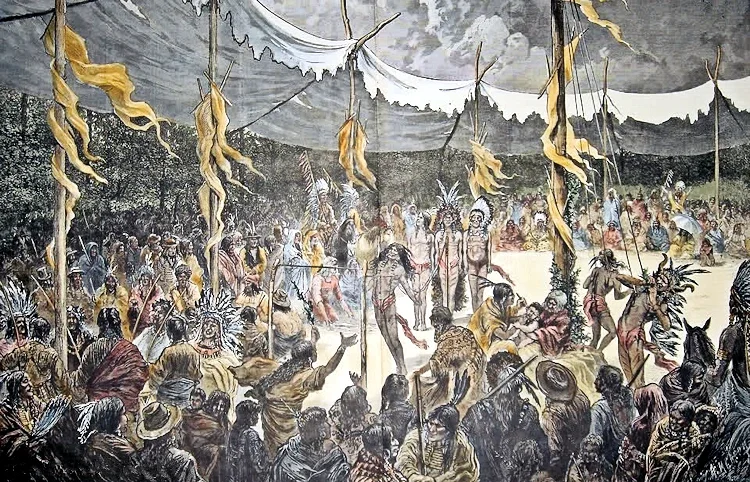
The outcome of the deliberations was a compromise, the chiefs agreeing that at about noon the next day they would produce Kahweechetwaymot for trial if the court were held, not at Battleford, but at a plateau some four hundred yards from the position in which the police had made their camp. The selection of this site was a manoeuvre engineered by the police officer to bring the negotiations under the guns of the improvised fort he intended throwing up. Following the parley, Crozier dispatched a courier to Battleford, thirty miles away, with instructions to Inspector Antrobus to come with speed and all available men remaining in barracks to Poundmaker's. A little later Crozier and his force departed for the government warehouses on Little Pine's reserve, adjoining Poundmaker's, six or seven miles to the west. These warehouses contained all the stores, bacon and flour chiefly, on the two reserves. Crozier was decidedly against these stores falling by any chance into the hands of the Indians in their present mood. With four loaded ox-teams he started back to his camp at Poundmaker's. The Thirst Dance camp straddled the trail, part of the two or three hundred lodges being pitched on either side of it. To avoid the Indians, Crozier detoured to the south of the trail with the wagons. The Indians were watching him. When opposite the camp a hundred young bucks, mounted and singing, burst suddenly upon him, circling the wagons and firing their guns over the heads of the little force. The idea of the police marching off with the provisions did not please them. Doubtless, they had these in mind themselves. The position was an uncomfortable one, but the police ignored the warlike demonstration staged for their benefit and marched on. At dusk, they reached the camp at Poundmaker's with their loads. Here were some old log buildings. The men were tired, the night was suffocating, the mosquitoes were a plague and the commissary had fallen down on its job-without the wagons they would have had little to eat-but there was no rest for the little company. Crozier ordered all buildings but one to be torn down. Of the logs so obtained he directed the construction of two rough bastions, abutting on the remaining building. The night dragged but toward morning the job was finished, the sacks of bacon and flour had been piled in tiers behind the log walls to serve as breastworks and the weary men stretched themselves on the ground for a few minutes' sleep. The completed fort was in this form: Log Building - Bastion - Bastion, a deep slough behind the fort afforded protection from that quarter. Inspector Antrobus and Sergeant-major Kirk with the reinforcements, totalling some sixty men, and including a number of Battleford civilians, reached Poundmaker's about eleven o'clock next morning and shortly after noon Poundmaker and his fellow chiefs arrived in accordance with their agreement at the plateau. Crozier assigned ten men to each of the bastions and leaving the others to await orders, covered by the twenty rifles and taking with him Interpreter Laronde, Constable Campbell Young and another man, went out to meet the chiefs and try Kahweechetwaymot. Just a month previous the Crees had held a begging dance in the town of Battleford. Those old aboriginal dances were novel and spectacular; they interested us and we all the whole town or most of it-looked on. Poundmaker, wearing a breechclout and a vest studded with brass nails, his long legs streaked with white mud, on his head a small cap formed from the dried skin of a bird, was there. Big Bear was there, mounted on a white horse, a rusty black coat on his back and a battered black soft felt hat on his head. The old chief rode up and down before the stores, proclaiming loudly to the world at large that it was meewassin-"good" - here, at Battle River; that it was not "hard" here when the traders brought out sacks of flour, sides of bacon, packages of tea and sugar and thick plugs of tobacco and piled the gifts on the ground beside the dancing warriors. Inspector Antrobus came past, riding a tall police horse. Imasees and Okemow Peeaysis, sons of Big Bear, galloped furiously across the prairie directly at the inspector. They carried in their hands folded umbrellas. As they reached Antrobus they jerked their ponies to a stand and the umbrellas flashed open. The police horse snorted, swerved violently, the officer's pith helmet rose in the air and sailed away over the grass and his startled mount bolted wildly with him for the barracks. 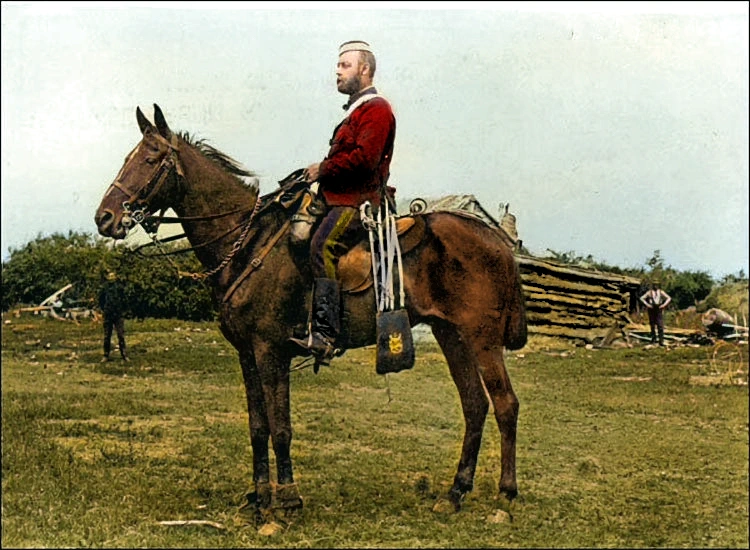
The Indians, looking on, grinned delightedly. Evidently they regarded the incident as a rattling fine joke. The inspector on the contrary could see nothing at all humorous in it. An hour later the dance was over and the Indians had gone to their camp on the hill south of the Battle River, when Inspector Antrobus, accompanied by William McKay, manager for the Hudson's Bay Company at Battleford, appeared among the lodges asking for the head chief Poundmaker indicated Big Bear. The inspector was intensely angry; he trembled with rage. "I have not much to say," he announced wrathfully, "and my message is for the head chief alone. Let no one else speak." He turned to Big Bear. "What are you doing here? You have no business, in town. Unless you are packed and on the trail back to the reserves in half an hour, I will put you chiefs under arrest and lock you up." Amazement for the moment held the Indians. Then Poundmaker, his dark face flushing, jumped to his feet. "There will be a bullet here," he declared loudly, a hand at his throat, "before you arrest one of us! When we are ready we will leave; not sooner." An old man got up. "He says no one must speak but Big Bear!" he cried. "Well, I am speaking. Let him stop me! Look at him," pointing at the officer's legs. Their unsoldierly shaking must have been mortifying in the extreme to Antrobus, who was anything but a timid man, but he could not stop it. Rage exacts its penalties. "And he tells us this!" The old man snorted contemptuously. "Wus!" The Indians looked and once more they laughed at the inspector. Antrobus was beside himself. He could not trust his tongue to further words. He climbed into his buckboard and clattered off. Two hours passed. The Cree camp was still on the hill south of the Battle, but no arrest had been made. When Crozier went out to meet the chiefs, there was still some difficulty he found about Kahweechetwaymot's trial. The Indian, backed by the young men, declined to give himself up. They were all wild, said Poundmaker, and it was hard to do anything with them. At another time it might be done, but, Poundmaker pointed out, their pride revolted against a surrender in the face of such a great gathering of their people, many from distant reserves. So the unending talk went on. The police seemed to be getting nowhere. The prestige of the scarlet-coated upholders of the law was at stake. If they gave way it would be many a day before it could be completely regained. The last would never be heard of it. So long as an Indian present remained alive, he would boast and acclaim to his listeners about the campfire at night of the time they bluffed the police. Crozier's patience was exhausted. He quit the council abruptly and returned to the fort. William McKay had arrived from Battleford about noon. The McKays had been Hudson's Bay Company officers for generations. They had been given by the Indians the family name of Little Bearskin. They were known to every Indian along the Saskatchewan. A Little Bearskin to these Indians impending explosion, rode among the mob, waving green branches, imploring the aggressors to be reasonable, to consider before it was too late. Their example had some effect; the storm sank to a murmurous undercurrent. But in a moment it rose again, more violently than ever. The hostiles surged around, jeering, whooping, raising their guns threateningly, and goading the police with taunts and epithets. Wandering Spirit, who in the war dance counted thirteen Blackfoot scalps, rushed out and seized McKay by the wrist, endeavouring to drag him over to the Indians' side. "Come!" he urged frenziedly. "You are crazy. You will be killed!" McKay pulled away Little Pine, amiable and friendly always, sitting on his horse, addressed the mob. They were wrong, he told his people, to defy the police. He was a notable chief, a warrior as well as an orator of parts, and he spoke forcibly and at some length. But they heard him with impatience. They had reached the stage where pacific words were almost an offence. Little Pine died shortly after the trouble. Rumour had it that poison was responsible; that he paid with his life for the stand he took that day in opposing the more turbulent among the bands. Sergeant-major Kirk sat like a statue on his horse in front of the line, gazing stonily ahead. At his horse's muzzle stood Wandering Spirit, muscles tense, dark eyes agleam, thin lips working, his lean claw-like hands gripping a Winchester. When the din was at its peak, Bagley saw the Indian strain and lift as though struggling under some ponderous 'weight and the rifle came up. Bagley held his breath. "Now it's coming! Now old John's going to get it!" The words said themselves over and over in the sergeant's mind. The blood-lust burned in the war chief's eyes, dull red pools glowing murkily in their sultry sockets. The seconds passed. What was restraining him? The body began to move off, the men in the rear-facing backward with their carbines ready for instant action. McKay paced evenly up and down between the two rows of levelled rifles. Bedlam broke loose. The Indians went wild. "Shoot them, shoot the red coat dogs!" they howled. "Why do we wait? Now-now was the time we agreed on to wipe out the dog chemoginusuk!" But the cooler men among the redskins frantically fought the outcries of the hotheads. "No-no! Be careful! Wait! Let the red coats shoot first!" And, referring to McKay, walking coolly up and down between the opposed forces: "Shame! Would you kill a Little Bearskin?" They brushed past the Hudson's Bay official and charged the retreating ranks, jostling the men, snatching at their clothing, stabbing their horses with the points of their knives, hoping to stampede them. One man cut off from the others, was stripped, his tunic and sidearms forcibly appropriated. Poundmaker himself wrested away his carbine. But the horses, like their riders, held firm. And no Indian fired. Neither did a policeman. Because the police, disciplined and obedient to orders, could not and would not no matter how aggravated provocation, be first to breach the peace. But if, even by accident under the tension, a single shot had sounded What would have followed, no man present during those pregnant moments cares to contemplate. Maddened over the successful coup of the police, a dozen of the most truculent braves seized Laronde and, powerful though he was, rushed him off through the poplar bluffs. That he, a half-breed with their own blood in his veins, should have aided the enemy-that, above all, he should have pointed out to the police Okemow and later stopped Kahweechetwaymot-incensed them beyond anything else. Laronde's chances of living seemed exceedingly remote. McKay knew that he was safe in making what at this stage was a perfectly impractical suggestion. Before the police left, McKay hunted up Poundmaker. "You must surrender the rifle you took from the policeman," he told him. Poundmaker's quick temper flared again. "I will not!" he exploded. "He was going to use it against us!" "Now, see here." McKay talked patiently to the handsome red man as he might have done had he been explaining some puzzling matter to an angry boy. "You must not look at this thing in that way. The gun did not belong to the policeman. It does not belong to the police at all. It belongs to the Queen." Poundmaker pondered this. Three years before he had guided the Marquis of Lorne, Governor-General of Canada, three hundred miles across the plains from Battleford to the Blackfoot Crossing. Poundmaker was an unusual Indian. He was the typical chief as one has been accustomed to picturing him from the literature of his youth-tall, dignified, deliberate in speech and manner, his striking face framed in a setting of raven-black hair hanging in two immense plaits far below his waist, with a certain native air of courtliness and distinction that impressed all who met him. No wonder that Lord Lorne had made much of the stately red man. Perhaps that was why Poundmaker held the governor-general in some respect. He did not wish to displease the noble lord's mother-in-law, the Queen. So in the end the gun was surrendered. 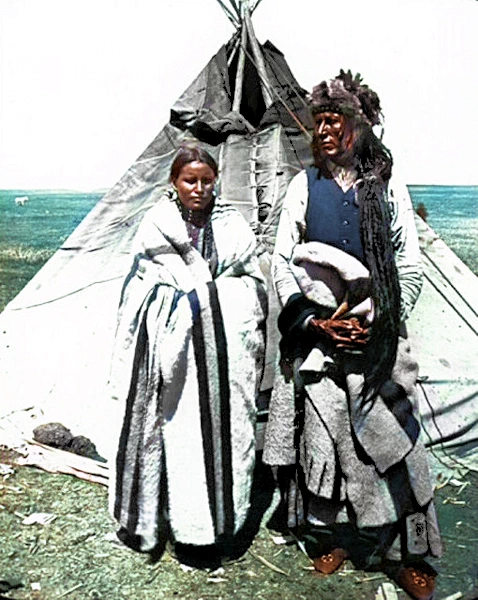
Half a dozen of us, civilians, were on our way from Battleford to Poundmaker's reserve. The parley out there had lasted three days. We had heard in Battleford that the situation was critical. The addition of a few rifles might be acceptable to the police, we thought. The afternoon was intensely hot. We had off-saddled halfway out to breathe our labouring horses and enjoy the poplar shade and clear cold water of Medicine Drum Creek. A horseman hove in sight, coming from the direction of Poundmaker's. He came up. "The fun's all over, fellows," he told us. "They're on their way in with their man. You might as well go home." In this and the preceding chapter I have endeavored to show Big Bear's band in a characteristic attitude of hostility to the government. The leaven of mischief was already at work; they were prepared to start, with all the inherent cruelty of the savage, on a course of rapine and bloodshed at the first favourable opportunity. How soon that opportunity was to arise the handful of white men who had made their way into that primitive corner of the far North-west beyond the Saskatchewan could then have small conception. |
Questions - Comments?


Links to all jkcc.com Webpages:
| Ausland Lake |
Northern Saskatchewan
| Deep River Fur Farm |
| Deep River Trapping Page |
| Deep River Fishing Page |
| My Norwegian Roots |
| Aasland Farm, Norway |
| My Norwegian Family |
| Early Mink of People Canada |
E. Rendle Bowness
| The Manager's Tale |
Hugh McKay Ross
| Sakitawak Bi-Centennial |
200 Year History.
| Lost Land of the Caribou |
Ed Theriau
| A History of Buffalo Narrows |
| Hugh (Lefty) McLeod |
Bush Pilot
| George Greening |
Bush Pilot
| Timber Trails |
A History of Big River
| Joe Anstett, Trapper |
| Bill Windrum, Bush Pilot |
| Face the North Wind |
By Art Karas
| North to Cree Lake |
By Art Karas
| Look at the Past |
A History Dore Lake
| George Abbott |
A Family History
| These Are The Prairies |
| William A. A. Jay, Trapper |
| John Hedlund, Trapper |
| Deep River Photo Gallery |
| Cyril Mahoney, Trapper |
| Saskatchewan |
A Pictorial History
| Who's Who in furs |
1952 to 1956
| A Century in the Making |
A Big River History
| Wings Beyond Road's End |
| The Northern Trapper, 1923 |
| My Various Links Page |
| Ron Clancy, Author |
| Roman Catholic Church |
A History from 1849
| Frontier Characters - Ron Clancy |
| Northern Trader - Ron Clancy |
| Various Deep River Videos |
| How the Indians Used the Birch |
| The Great Fur Land |
| The Death of Albert Johnson |
| A Mink and Fish Story |
Buffalo Narrows
| Gold and Other Stories |
Berry Richards
| Saskatchewan James Carnegie |
| Ausland Lake |
Northern Saskatchewan
| Deep River Fur Farm |
| Deep River Trapping Page |
| Deep River Fishing Page |
| My Norwegian Roots |
| Aasland Farm, Norway |
| My Norwegian Family |
| Early Mink of People Canada |
E. Rendle Bowness
| The Manager's Tale |
Hugh McKay Ross
| Sakitawak Bi-Centennial |
200 Year History.
| Lost Land of the Caribou |
Ed Theriau
| A History of Buffalo Narrows |
| Hugh (Lefty) McLeod |
Bush Pilot
| George Greening |
Bush Pilot
| Timber Trails |
A History of Big River
| Joe Anstett, Trapper |
| Bill Windrum, Bush Pilot |
| Face the North Wind |
By Art Karas
| North to Cree Lake |
By Art Karas
| Look at the Past |
A History Dore Lake
| George Abbott |
A Family History
| These Are The Prairies |
| William A. A. Jay, Trapper |
| John Hedlund, Trapper |
| Deep River Photo Gallery |
| Cyril Mahoney, Trapper |
| Saskatchewan |
A Pictorial History
| Who's Who in furs |
1952 to 1956
| A Century in the Making |
A Big River History
| Wings Beyond Road's End |
| The Northern Trapper, 1923 |
| My Various Links Page |
| Ron Clancy, Author |
| Roman Catholic Church |
A History from 1849
| Frontier Characters - Ron Clancy |
| Northern Trader - Ron Clancy |
| Various Deep River Videos |
| How the Indians Used the Birch |
| The Great Fur Land |
| The Death of Albert Johnson |
| A Mink and Fish Story |
Buffalo Narrows
| Gold and Other Stories |
Berry Richards
| Saskatchewan James Carnegie |