
|
My friend Stanley Simpson lay seriously ill in Battleford of fever brought on by exposure and privation in the Indian camp. I was daily at his side, doing what I could to cheer and help him. At length he was convalescent, and one evening when I came in as usual to chat with him he told me how he had been misbehaving himself in the afternoon. He had felt quite strong and having been bed-bound for"more than a month decided to practise a little deception against the powers that were by stealing out and taking a look at himself in the glass on the wall opposite him. He had been standing before this, imagining that a little colour was creeping back into his wan, pinched cheeks, when something struck the back of his head. He realized with amazement that it had been the edge of the bedstead. He heard the lady of the house, alarmed by the fall, rushing upstairs and the poor invalid, trembling violently and looking like a ghost, feverishly pawed himself back into bed. Stanley was always such a modest fellow and his landlady, poor thing, might see him in his nightshirt! No more experiments for a week; then we bundled him into a light spring wagon with a mattress in the bottom and started across the two hundred miles of prairie for Regina, summoned as witnesses against the Indians of Big Bear's band. Meantime Four-Sky Thunder, accompanied by Miserable Man and a small party, had come into Battleford and surrendered to Colonel Otter. This was extremely short-sighted of Miserable Man, as he no doubt concluded when he was later hanged for the murder of Charles Gouin at Frog Lake. 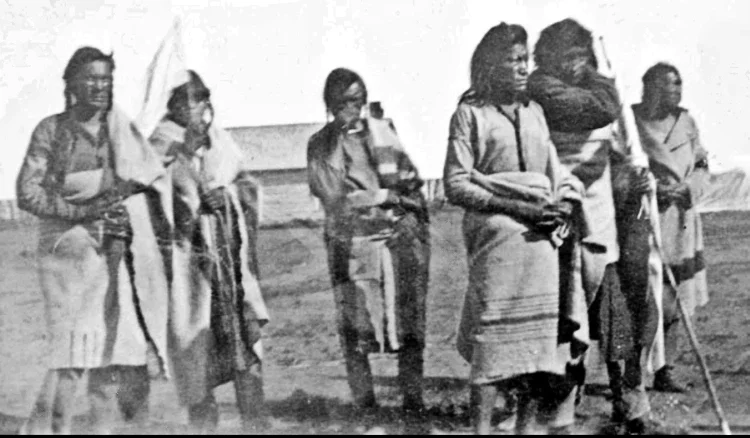
At Regina, I appeared against nine Indians tried at one sitting on a charge of treason felony, among them my old acquaintance Oskatask, who questioned me at some length. I had much satisfaction in answering him. All were sentenced to the penitentiary for a term of years. Big Bear had given himself up at Fort Carlton, two hundred miles east of Fort Pitt, about July 1st, to the North-West Mounted Police. The old chief evaded three columns of troops sent out to intercept him. A councillor and his youngest son, Horse Child, were taken with him. I was a witness also at the trial of Big Bear, though this time for the defence. I told how, at the moment of the shooting, he had rushed toward the murderers shouting: "Tesqua! Tesqua! (Stop! Stop!)", how he had expressed to Mr. Simpson his sorrow for what had occurred, how at our suggestion he had called a council to urge his followers to let the police quit Pitt unmolested, and had afterward held his band back when Captain Dickens abandoned the place; how he had spoken for us when Wandering Spirit in council tried to incite a second massacre, how Chaquapocase (as I learned) the night after Frenchman's Butte had started for the McLeans' tent to shoot the chief trader in revenge for the death of the murderer Kahweechetwaymot and how Big Bear had gone after him and taken away his gun. The old chief was in sore perplexity and distress and I spoke fervently on his behalf. With a world of trouble in the kindly, expressive old eyes he sat and watched me while the interpreter beside him translated my testimony in his ear, and as I warmed in his defence and the words came fast and tumultuously to my lips he nodded his head emphatically in confirmation and the cloud seemed to lift from his seamed and rugged patriarchal face. Big Bear is dead, but it will always be a source of gratification to me that I had the opportunity to do something to lighten the misfortunes that overtook his old age and that I made the most of it. The charge was treason-felony and the verdict was guilty. Brought before the court to learn his fate, Justice Richardson said: "Big Bear, have you anything to say before sentence is passed upon you?" The old man drew himself up with that imperious air that proclaimed him leader and fitted him so well; the thick nostrils expanded, the broad, deep chest was thrown out, the strong jaw looked aggressively prominent, and the mouth was a straight line. He gave his head the little characteristic toss that always preceded his speeches. "I think I should have something to say," he began slowly, "about the occurrences which brought me here in chains!" He spoke in his native Cree, knowing no English. He paused. Then with the earnestness, the eloquence and the pathos that never failed to move an audience, red or white, he went on to speak of the troubles of the spring. "I knew little of the killing at Frog Lake beyond hearing the shots fired. When any wrong was brewing I did my best to stop it in the beginning. The turbulent ones of the band got beyond my control and shed the blood of those I would have protected. I was away from Frog Lake a part of the winter, hunting and fishing, and the rebellion had commenced before I got back. When white men were few in the country I gave them the hand of brotherhood. I am sorry so few are here who can witness for my friendly acts. "Can anyone stand out and say that I ordered the death of a priest or an agent? You think I encouraged my people to take part in the trouble. I did not. I advised them against it. I felt sorry when they killed those men at Frog Lake, but the truth is when news of the fight at Duck Lake reached us my band ignored my authority and despised me because I did not side with the half-breeds. I did not so much as take a white man's horse. I always believed that by being the friend of the white man, I and my people would be helped by those of them who had wealth. I always thought it paid to do all the good I could. Now my heart is on the ground. "I look around me in this room and see it crowded with handsome faces - faces far more handsome than my own" (laughter). "I have ruled my country for a long time. Now I am in chains and will be sent to prison, but I have no doubt the handsome faces I admire about me will be competent to govern the land" (laughter). "At present, I am dead to my people. Many of my band are hiding in the woods, paralyzed with terror. Cannot this court send them a pardon? My own children! - perhaps they are starving and outcasts, too, afraid to appear in the light of day. If the government does not come to them with help before the winter sets in, my band will surely perish. "But I have too much confidence in the Great Grandmother to fear that starvation will be allowed to overtake my people. The time will come when the Indians of the North-West will be of much service to the Great Grandmother. I plead again," he cried, stretching forth his hands, "to you, the chiefs of the white men's laws, for pity and help to the outcasts of my band! "I have only a few words more to say. Sometimes in the past, I have spoken stiffly to the Indian agents, but when I did it was only in order to obtain my rights. The North-West belonged to me, but I perhaps will not live to see it again. I ask the court to publish my speech and to scatter it among the white people. It is my defence. "I am old and ugly, but I have tried to do good. Pity the children of my tribe! Pity the old and helpless of my people! I speak with a single tongue; and because Big Bear has always been the friend of the white man, send out and pardon and give them help! "How! Aquisanee - I have spoken!" A tense silence held the crowded courtroom as Big Bear concluded. The man would have been calloused indeed who could listen to that stirring appeal, the impassioned outburst of the aged, untutored orator, unmoved. The fates had been unkind. Dejected he was, lonely, shorn of his freedom, bewildered he must have been. But however broken he might be, and probably was, in the privacy of his solitary cell, here, before the people of an alien race who had entered and possessed his land, he was still able to hold up his head; he was still Big Bear, chief of the Crees. The stout old heart still beat strongly in the warrior's breast. His spirit, though bowed, refused to be crushed. And his plea was - not for himself; he was above that - but for his people, far less worthy than himself - for his children, hiding in terror, "afraid to show themselves in the big light of day." My eyes - I am not ashamed to say it - were moist. My heart went out to the kindly, pleasant old man I had known, who found "so few to witness for his friendly acts." I was glad not to be among that absent number. "Big Bear," said Justice Richardson, and his tone was not unkind, "you have been found guilty by an impartial jury. You cannot be excused from all responsibility for the misdoings of your band. The sentence of the court is that you be imprisoned in the penitentiary at Stony Mountain for three years." Wandering Spirit had recovered from his self-inflicted wound. On September 22nd he was brought before the criminal court at Battleford charged with having on April 2nd, 1885, shot to death Thomas Trueman Quinn, Indian "Are you guilty or not guilty?" asked the court. "The charge is true," answered the war chief. Judge Rouleau, in sentencing him, said: "Wandering Spirit, you have confessed to having committed one of the most heinous crimes a man can commit. I need not say much, for you now recognize the gravity of your offence. You were doing murder while others burned houses and committed other crimes. You could not expect any good to follow your acts. You were too weak to oppose the whites and could not have provided for yourselves even if you had killed them all, and now you would starve unless the government took you in charge. If the whites had done as you did they would have killed the Indians, but they took the most guilty ones - those who took a prominent part in crime - and are now feeding the rest. 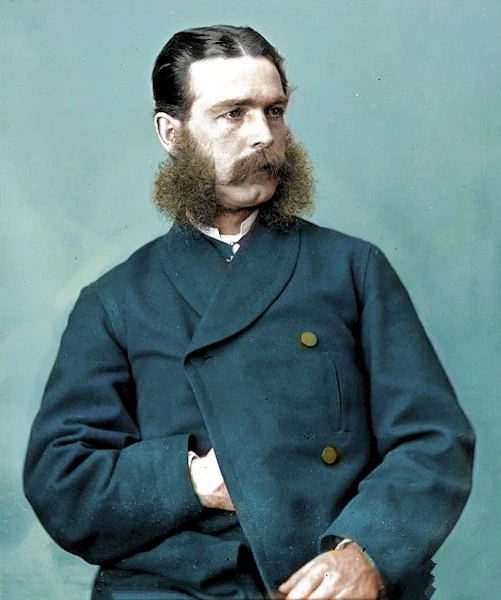
"Instead of listening to wise men you preferred to listen to the advice of bad men as poor as yourselves, who could not help you if they wanted to and who only got you into trouble. The government does not wish to destroy the Indians. They wish to help them to live like white men; but as far as murderers are concerned, the government has no pity. If a white man murders an Indian he must hang and so must an Indian if he kills a white man. "The sentence of the court is that you, Wandering Spirit, be taken back to the guardroom at the Mounted Police barracks and there confined until the 27th day of November next; thence to the place of execution and hanged by the neck until you are dead, and may God have mercy on your soul." Dressy Man and Charlebois were tried for the murder of the old Indian woman - the weetigo - and sentenced to hang. The sentence was afterward commuted. Miserable Man endeavoured to prove an alibi. I had returned from Regina and was present at his trial in Battleford. He was brought into the courthouse handcuffed to Manichoos, another Frog Lake murderer, both being charged with the murder of Charles Gouin. Manichoos, by order of Wandering Spirit, had first shot Gouin, who had run for the door of Pritchard's house, a few paces off, when Quinn fell beside him. Gouin was hit in the shoulder. He fell forward on his face and turned over on his elbow, groaning with pain. Miserable Man, having left me in the store just a moment before, rushed up, placed his gun against Gouin's chest, pulled the trigger and finished him. He sat with Manichoos on the day of the trial on a bench at the side of the courtroom. I stood with the crowd at the back. Miserable Man looked over and saw me. He smiled his most intriguing smile. I think he was the ugliest Indian I ever knew and I cannot imagine the smile improved his appearance. He pointed at me with the first finger of his right hand, placed the back of the hand directly before his lips, still with the finger extended; and pushed it out directly before him. He opened the hand and moved it palm downward next to his heart and thrust it quickly straight out before him. Finally, he tapped his chest with his forefinger. All of which, being translated, read: "My brother; speak good for me, Miserable Man." I had secured ample evidence against him among the Indians of the band and the trial was short. Judge Rouleau asked him the usual question - whether he had anything to say before the sentence was passed. Miserable Man was no speaker, but he did his best. "When the man was shot I was in the Company's shop with" - he faced about and ran his little weasel eyes over the crowd at the back of the room - "with him!" he concluded, pointing me out with his finger. The judge then pronounced the sentence Miserable Man beamed benignly at the judge as he stopped speaking. Then in a voice plainly audible in the court-room, he exclaimed: "Aquisee, mahga!" Literally, the remark might be translated: "That's it, but!" This, however, does not convey its exact meaning. It is an expression, common among the Crees, of sarcastic acceptance of a proposition. Its English equivalent would approach an ironical "Hear, hear!" Manichoos was likewise sentenced to hang. Four-Sky Thunder was given fourteen years' imprisonment for burning the church. I secured him as a witness against Miserable Man and Manichoos, and his sentence, in consideration of this service, was commuted, as I told him it would be, at the end of six years. Nokipawchass was sentenced to hang with the others for the murder of Cowan. In view of the favourable reports of the prisoners concerning him and doubt as to the reliability of the testimony on which he was convicted, his sentence was commuted. Subsequently, he was liberated. Napaise, or Iron Body, was convicted of the murder of George Dill, my former partner. He called in his defence Little Bear, who testified as follows: "I was present when Dill was killed. Saw him turn around and the prisoner fired at him and knocked him down." Then Little Bear, or Apischiskoos, was put on trial for the same crime and also convicted. In his own defence, he said: "I will tell the truth about what I did and what I know. When I was at the root house. Wandering Spirit came for me to take the white people to the camp. He went away and I heard three shots. While still there I saw the whites walking and heard more shots. I jumped on my horse and rode toward the shooting. I saw the priests already dead. I saw three whites running and I heard Wandering Spirit calling. I then went after the whites. I heard more shots. I saw one man. Other Indians were firing at him and I also fired two shots. After I had fired, the white man turned and faced us and Napaise fired and knocked him down." Napaise said: "I understood it was only a murderer that the law would deal so severely with, so I went to Prince Albert and gave myself up, and now I find I am accused of murder. Kahweechetwaymot shot Williscraft and then Gilchrist. Then Apischiskoos and I both fired at Dill but missed and Maymayquaysoo knocked him down. Wandering Spirit was the cause of it all. He was jealous of those who wished to take a reservation. After killing Quinn he was afraid and wished to drag others into it." Paypamakeesik, or Walking the Sky, was sentenced for the murder of Father Fafard, with whom he lived as a boy for several years. Wandering Spirit, after killing Quinn, first shot the priest. He ran up to him as the missionary walked in the direction of the Indian camp. "Why did you not give us the news of the Duck Lake fight when you learned it?" he cried. "You wish to side with the whites and against us - follow them" He raised his rifle and shot the priest through the neck. Father Fafard fell on his face. He still breathed and Walking the Sky stepped out of a group behind him, put the muzzle of his gun close to the back of the priest's head and sent a bullet through his brain. Kahweechetwaymot was dead by a shell at Frenchman's Butte; Maymayquaysoo and Paskooquiyoo (the murderers of John Delaney and Father Marchand) were fugitives with Little Poplar, Imasees and others across the Montana line; the remaining murderers had been tried and sentenced to hang on November 27th. They were: Wandering Spirit, Miserable Man, Paypamakeesik, Manichoos, Napaise and Apischiskoos. |
Questions - Comments?


Links to all jkcc.com Webpages:
| Ausland Lake |
Northern Saskatchewan
| Deep River Fur Farm |
| Deep River Trapping Page |
| Deep River Fishing Page |
| My Norwegian Roots |
| Aasland Farm, Norway |
| My Norwegian Family |
| Early Mink of People Canada |
E. Rendle Bowness
| The Manager's Tale |
Hugh McKay Ross
| Sakitawak Bi-Centennial |
200 Year History.
| Lost Land of the Caribou |
Ed Theriau
| A History of Buffalo Narrows |
| Hugh (Lefty) McLeod |
Bush Pilot
| George Greening |
Bush Pilot
| Timber Trails |
A History of Big River
| Joe Anstett, Trapper |
| Bill Windrum, Bush Pilot |
| Face the North Wind |
By Art Karas
| North to Cree Lake |
By Art Karas
| Look at the Past |
A History Dore Lake
| George Abbott |
A Family History
| These Are The Prairies |
| William A. A. Jay, Trapper |
| John Hedlund, Trapper |
| Deep River Photo Gallery |
| Cyril Mahoney, Trapper |
| Saskatchewan |
A Pictorial History
| Who's Who in furs |
1952 to 1956
| A Century in the Making |
A Big River History
| Wings Beyond Road's End |
| The Northern Trapper, 1923 |
| My Various Links Page |
| Ron Clancy, Author |
| Roman Catholic Church |
A History from 1849
| Frontier Characters - Ron Clancy |
| Northern Trader - Ron Clancy |
| Various Deep River Videos |
| How the Indians Used the Birch |
| The Great Fur Land |
| The Death of Albert Johnson |
| A Mink and Fish Story |
Buffalo Narrows
| Gold and Other Stories |
Berry Richards
| Saskatchewan James Carnegie |
| Ausland Lake |
Northern Saskatchewan
| Deep River Fur Farm |
| Deep River Trapping Page |
| Deep River Fishing Page |
| My Norwegian Roots |
| Aasland Farm, Norway |
| My Norwegian Family |
| Early Mink of People Canada |
E. Rendle Bowness
| The Manager's Tale |
Hugh McKay Ross
| Sakitawak Bi-Centennial |
200 Year History.
| Lost Land of the Caribou |
Ed Theriau
| A History of Buffalo Narrows |
| Hugh (Lefty) McLeod |
Bush Pilot
| George Greening |
Bush Pilot
| Timber Trails |
A History of Big River
| Joe Anstett, Trapper |
| Bill Windrum, Bush Pilot |
| Face the North Wind |
By Art Karas
| North to Cree Lake |
By Art Karas
| Look at the Past |
A History Dore Lake
| George Abbott |
A Family History
| These Are The Prairies |
| William A. A. Jay, Trapper |
| John Hedlund, Trapper |
| Deep River Photo Gallery |
| Cyril Mahoney, Trapper |
| Saskatchewan |
A Pictorial History
| Who's Who in furs |
1952 to 1956
| A Century in the Making |
A Big River History
| Wings Beyond Road's End |
| The Northern Trapper, 1923 |
| My Various Links Page |
| Ron Clancy, Author |
| Roman Catholic Church |
A History from 1849
| Frontier Characters - Ron Clancy |
| Northern Trader - Ron Clancy |
| Various Deep River Videos |
| How the Indians Used the Birch |
| The Great Fur Land |
| The Death of Albert Johnson |
| A Mink and Fish Story |
Buffalo Narrows
| Gold and Other Stories |
Berry Richards
| Saskatchewan James Carnegie |