
|
Spring came on apace; the days grew warm. About the camp raced the boys, the younger nude, shooting with bow and arrows at gophers and marks or rolling in the dust with wolfish puppies. Here gambols a youngster with bare legs, about whose brown little body is wrapped a mounted policeman's brass-buttoned scarlet tunic, secured at Pitt. Outside this, hangs about his hips, is hooked a pair of ladies' corsets, got by his father at the same place and time. He is a quaint picture as he frisks about with a ready bow, the envy of his playmates. An ancient redskin passes near them. He wears a very dark, ragged and dirty blanket folded about his stooped shoulders, and on his head a nice clean freshly pipe-clayed military helmet. He feels that he is elegantly attired and as is befitting, his gait is stately and solemn. He and the youngsters are on the same intellectual plane. As time passed and we grew perhaps in the general esteem of the Indians, they were ready to provide both Stanley Simpson and myself with wives. Lone Man, with whom Simpson lived, was particularly anxious that he should marry his young daughter. Simpson got around the difficulty, I believe, by telling him he already had a wife and being a white man, his principles would not allow him to take another. My defence was poverty - one of the most dependable, year-round, hardworking defences of which I have any knowledge. When a dog feast was held and there was a likelihood of the prisoners being invited to partake, I tried to keep out of sight. It is a grave affront to refuse to eat when an Indian places food of whatever kind before one. After Big Bear had spoken, urging that some of our clothing be returned to us, the camp one day gave a dog feast and asked the prisoners to attend. The Indians' commendable purpose was to give them bedding and clothing. I saw Kahneepo-taytayo coming to ask the whites, but I would rather get along with the rags I wore and the one cowskin I slept on than receive all the blankets and wearing apparel in the world at the price of eating stewed dog. It is probably delicious, but I imagine one has to cultivate a taste for it. Nursing this idea, I kept carefully out of the way of the head dancer, slipping from lodge to lodge and finally doubling back and eluding him altogether. However, the Indians were good enough to set apart a blanket for me, notwithstanding my studied avoidance of their intended hospitality. It came in useful a little later when I had to guard Louis Patenaude's horses at night. 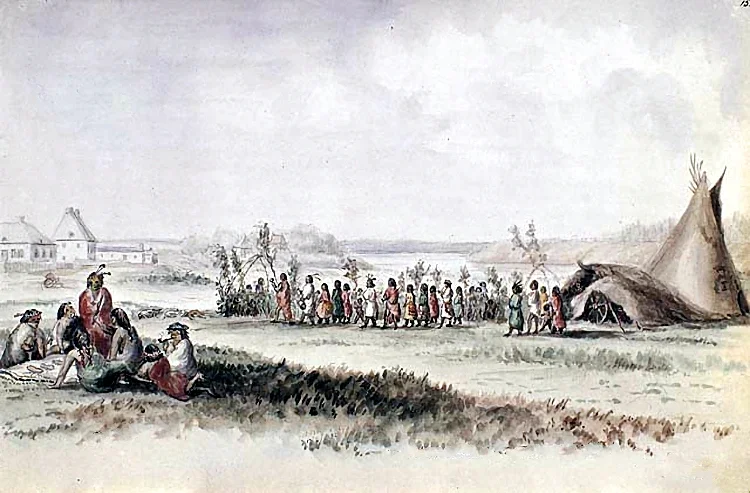
A few weeks after coming into camp Stanley Simpson had an attack of quinsy (a rare complication of tonsillitis). His throat was so swollen and inflamed that he could eat no solid food and for several days had almost starved. Then Lone Man's wife came to him one evening with a bowl of broth. Simpson was ravenous; intense yearning filled his eyes as he sniffed at it. The aroma was most intriguing. Still, he hesitated. He wished most ardently to drink it, yet he feared to ask questions and he did not dare touch it without. And he might not care for it when he got an answer. "What's it made of?" he said at length desperately. "Meat," said Mrs. Lone Man, noncommittally. "That must mean beef," Simpson observed thoughtfully. "Smells nice - looks all right," I remarked encouragingly. I was glad to see one of the dearest friends I ever had want to take something, no matter what. And he drank - drank it with relish. A moment later Mrs. Lone Man said with a grin: "I suppose you don't know what it was?" Simpson looked up in alarm. He shook his head. "Well," said the warm-hearted lady; "dog soup." And Simpson went out with a rush and parted with his broth in much mental and physical anguish. We were moving camp. Stanley Simpson and I had been walking near the tail of the procession and arriving at the new campground we found some lodges already pitched. Occasionally an Indian lacking transportation left his lodge poles at one camp and cut others when he reached the next. We crossed a poplar bluff near the new camp. Some of the Indians were cutting poles and Catfish, a Chippewyan, made a feint of slashing my legs as we passed him. The axe swung uncomfortably near. The move was quite unexpected and naturally, I jumped. This amused Catfish, and pleased him also; I was easily scared, he said. It was a great thing to scare a white man. I said nothing, but I made a mental note of the incident. Some day I hoped to repay Catfish in a way he mightn't like. The chance came sooner than I had looked for. Catfish was a tireless braggart, so I knew him to be a coward. However, the policy still demanded that we treat such pleasantries on the part of our captors as jokes. Later, the demands of policy 'were less exacting. We began to know our men. We were camped on the bank of the Pipestone. A group of Indians one morning were amusing themselves "pulling sticks." I was resting on my back in the grass near them with my knees drawn up. Other prisoners lounged about. The game is a simple one. Two men sit on the ground, facing, their knees bent and the soles of their feet opposed. Their arms rest on their knees and their hands grasp a round stick two feet long, held firmly between them over their feet. At a signal both pull, until one is lifted or hauled over by the other. It is a simple test of strength, though there is a knack to it. Catfish came over, leaned across my legs and pushing me with the stick, invited me to try my back against his. I did not care for the game and told him so. He persisted. I jolted him slightly with a foot. He flared up and grabbed me around the knees. Then I, too, became earnest. I drew my feet back suddenly and planted them in the Chippewyan's chest. I happened to be wearing boots that morning. Catfish described a complete parabola off the back of his neck, and I rose and looked at him smilingly as he got up, sputtering and coughing, some distance away. Halpin expostulated in an undertone. He said I was indiscreet and I expect he was right; anyway, I told him some things I might better have left unsaid. Catfish looked displeased. He mumbled several uncomplimentary epithets and concluded by remarking that he might very likely kill me. I told him to come and I would save him the trouble by reversing the programme. He did not come, and I reminded him that he had once told me I was easily scared. The Wood Crees laughed - the humiliation of humiliations! And the prestige and pride of Catfish, chief brave of the Chippewyans, was irretrievably damaged. Later, I took occasion to impress upon General Strange and a board of inquiry what a good Indian Catfish was, I do not think Catfish appreciated my interest. I was standing one day outside Patenaude's lodge when an Indian came up and taking my arm, led me to an open space between the lodges. He pointed to some animals grazing a short way off. "You see that white horse?" he asked. I nodded. "That's the one I was riding when I told you to go on, I didn't want to hurt you." "I'm not likely to forget him," I replied. He was the Indian I had seen chasing the half-breed Goulet with a gun during the massacre; Goulet had given him the horse to spare his life. Later, in dread of what seemed imminent death at his hands, I had come face to face with this Indian riding the horse, and for some reason which I am unable even today to guess at, he had permitted me to continue walking instead of stretching me lifeless at his feet. So I expressed my deep gratitude for his unquestioned magnanimity. As the days grew long, Stanley Simpson and myself obtained permission to leave camp and hunt in the woods and lakes abounding everywhere along the Saskatchewan. We borrowed guns from our keepers and were put on our parole not to attempt to escape. For that matter, and for reasons already stated, we had no thought of making such an attempt. Many a long afternoon we tramped about together, as we had done often before in happier times, enjoying the glorious spring of the Northwest and escaping for a few hours the unrelished society of our savage hosts. The ducks, prairie chickens, rabbits and occasional eggs we brought home gave us a welcome change from our usual bill of fare. Simpson was the most enthusiastic sportsman I ever knew. He would wade into the cold water of a slough up to his neck, holding his gun high, and stand like a post, only his head showing, for half an hour, on the chance of getting a shot at a duck that had the perversity to keep beyond the range of the shore. I had always considered my love of sport above the average, but it never carried me to such lengths as did that of that prince of good fellows, Stanley Simpson. We had been out a mile or two from camp one afternoon 'and were strolling leisurely homeward. Nearing the lodges we met a number of Indians riding furiously toward the Saskatchewan River, the north bank of which lay not far distant. We saw at once that something unusual was in the wind. Could the troops we were expecting have been reported? At the camp a few minutes later we quickly learned the reason for the excitement. Henry Quinn and Pierre Blondin were missing - it was believed they were attempting to escape! The situation looked dark for them should they be caught. It also looked dark for us who remained, for the Indians had repeatedly declared that if one prisoner escaped they would kill all the others. We spent a bad quarter of an hour; then the Indians returned with the fugitives. For they had been fugitives. They were taken into Pritchard's tent. Big Bear's soldiers gathered at the door outside, armed and in anything but a peaceful mood. It had grown dusk. I was standing near, awaiting developments, when Patenaude came up to me, his gun on his arm, and said roughly: "Go to my tent and stay there!" 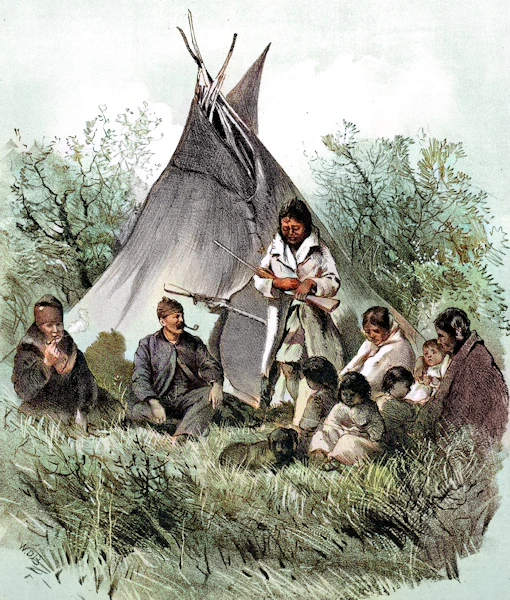
Never before had he spoken to me in such a fashion and I obeyed immediately, for I knew he must have a reason. He came in an hour later and explained: Big Bear's band had been determined to kill the fugitives but the Wood Crees once more stepped in and saved them. Kahweechetwaymot entered Pritchard's tent, sat down before Quinn and began to polish his revolver with a silk handkerchief. "Go outside tonight and I will shoot you!" he told Quinn. A moment later, when things looked darkest, two Wood Crees of the Saddle Lake band came with their guns and announced they intended to protect Quinn. "If you harm him it means war between the Wood and Plains Crees," was their ultimatum. Big Bear's men, for all their swagger, were not willing to risk war. The Wood Indians stayed all night with Quinn. Louis explained to me that I had been in danger outside. In case of trouble, he wanted me out of harm's way. Our amusements in the camp were not sufficiently numerous or distracting to keep us up late at night. In some way I do not now remember I had managed to secure again the violin I had at Frog Lake. Then Simpson and I visited the McLeans often in their tents and passed many an hour pleasantly that would otherwise have crawled, chatting with Mr. and Mrs. McLean and their daughters. Having no books we could not read and so smoked the more. Four-Sky-Thunder kept me in tobacco. Lone Man had a beautiful meerschaum pipe that had belonged to Father Marchand, the murdered priest. I owned a nice briar which Lone Man coveted and we exchanged. The meerschaum I later gave to Senator Girard, of Manitoba. 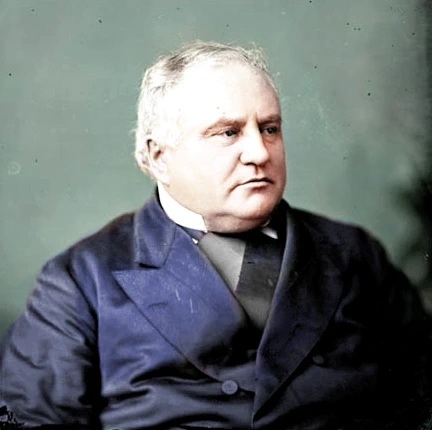
Lone Man was an unwavering friend of mine. He said that when the cruel war was over he would take me and go across the country to the Missouri River, the land of the Kitchemokoman. I should take a position there with a trading company and he would camp close by. I could live with him and furnish the tea and provisions for the family. As Simpson had refused his daughter, I might have her. The picture was an alluring one and I did not think it necessary at the time to inform him that I was too modest to think I might be able to fill such a prominent place in it. "N'chawamis," said Lone Man one day, "when the soldiers come I will give you a rifle and you will fight with us against them," I said my aim was poor. There were Indians in camp without rifles who would be unable of much more effective work; he had better loan it to them. I had a violin and while the fighting was in progress I would furnish the music. Doubtless, the troops would have a band and it wouldn't do to show that we were behind them in any way. I think Lone Man accepted my views. At all events, he 'did not offer to supply me with a weapon when the troops under General Strange arrived. Mrs. Delaney and Mrs. Gowanlock rode with Pritchard on his wagon when the camp was moved. The McLeans were allowed to borrow a team to pull their belongings. Many of the children in their big family were very young and it was not always possible for everybody to ride. Patenaude sometimes gave me a seat on his wagon which I resigned to one of the McLeans. When it became necessary to abandon the wagons after the Frenchman's Butte battle, the situation was made harder for Mrs. McLean and the girls. They were obliged to walk and not infrequently to carry the toddlers of the family on their backs. Little Poplar, early in our captivity, wished to add the two eldest girls to his seraglio. He had only six wives. It was amusing and somewhat alarming. I do not know how the difficulty was got around but he was in some manner induced to forgo his polygamous inclinations in so far as white wives were concerned. Hodson, a stocky, pock-marked, cross-eyed little Englishman who wore glasses and had been the McLeans' cook at Pitt, was an object of special and peculiar interest to the Indians. They appeared to regard him as some new variety of grub, and I know they would have liked to kill him out of mere idle curiosity to see him squirm. I wonder they did not do it, but he lived to hang some of them later. |
Questions - Comments?


Links to all jkcc.com Webpages:
| Ausland Lake |
Northern Saskatchewan
| Deep River Fur Farm |
| Deep River Trapping Page |
| Deep River Fishing Page |
| My Norwegian Roots |
| Aasland Farm, Norway |
| My Norwegian Family |
| Early Mink of People Canada |
E. Rendle Bowness
| The Manager's Tale |
Hugh McKay Ross
| Sakitawak Bi-Centennial |
200 Year History.
| Lost Land of the Caribou |
Ed Theriau
| A History of Buffalo Narrows |
| Hugh (Lefty) McLeod |
Bush Pilot
| George Greening |
Bush Pilot
| Timber Trails |
A History of Big River
| Joe Anstett, Trapper |
| Bill Windrum, Bush Pilot |
| Face the North Wind |
By Art Karas
| North to Cree Lake |
By Art Karas
| Look at the Past |
A History Dore Lake
| George Abbott |
A Family History
| These Are The Prairies |
| William A. A. Jay, Trapper |
| John Hedlund, Trapper |
| Deep River Photo Gallery |
| Cyril Mahoney, Trapper |
| Saskatchewan |
A Pictorial History
| Who's Who in furs |
1952 to 1956
| A Century in the Making |
A Big River History
| Wings Beyond Road's End |
| The Northern Trapper, 1923 |
| My Various Links Page |
| Ron Clancy, Author |
| Roman Catholic Church |
A History from 1849
| Frontier Characters - Ron Clancy |
| Northern Trader - Ron Clancy |
| Various Deep River Videos |
| How the Indians Used the Birch |
| The Great Fur Land |
| The Death of Albert Johnson |
| A Mink and Fish Story |
Buffalo Narrows
| Gold and Other Stories |
Berry Richards
| Saskatchewan James Carnegie |
| Ausland Lake |
Northern Saskatchewan
| Deep River Fur Farm |
| Deep River Trapping Page |
| Deep River Fishing Page |
| My Norwegian Roots |
| Aasland Farm, Norway |
| My Norwegian Family |
| Early Mink of People Canada |
E. Rendle Bowness
| The Manager's Tale |
Hugh McKay Ross
| Sakitawak Bi-Centennial |
200 Year History.
| Lost Land of the Caribou |
Ed Theriau
| A History of Buffalo Narrows |
| Hugh (Lefty) McLeod |
Bush Pilot
| George Greening |
Bush Pilot
| Timber Trails |
A History of Big River
| Joe Anstett, Trapper |
| Bill Windrum, Bush Pilot |
| Face the North Wind |
By Art Karas
| North to Cree Lake |
By Art Karas
| Look at the Past |
A History Dore Lake
| George Abbott |
A Family History
| These Are The Prairies |
| William A. A. Jay, Trapper |
| John Hedlund, Trapper |
| Deep River Photo Gallery |
| Cyril Mahoney, Trapper |
| Saskatchewan |
A Pictorial History
| Who's Who in furs |
1952 to 1956
| A Century in the Making |
A Big River History
| Wings Beyond Road's End |
| The Northern Trapper, 1923 |
| My Various Links Page |
| Ron Clancy, Author |
| Roman Catholic Church |
A History from 1849
| Frontier Characters - Ron Clancy |
| Northern Trader - Ron Clancy |
| Various Deep River Videos |
| How the Indians Used the Birch |
| The Great Fur Land |
| The Death of Albert Johnson |
| A Mink and Fish Story |
Buffalo Narrows
| Gold and Other Stories |
Berry Richards
| Saskatchewan James Carnegie |